BYOB changes what you are buying
At a licensed venue, food and drink frequently come together and the caterer or venue handles both. At an unlicensed Philadelphia venue, the caterer supplies food and service while you supply the alcohol, and in most cases you also need a licensed, insured bartending service to pour it.
This is a saving overall, since you are buying alcohol at retail rather than at event markup, but it is two bookings instead of one and the coordination is yours. Ask the caterer whether they work with bartending services they recommend, since many do and it removes the coordination problem entirely.
Check the venue rules first
Before shortlisting anyone, establish whether your venue permits outside catering, restricts you to an approved list, or mandates in-house. A tasting with a caterer your venue will not admit is wasted time.
Making quotes comparable
Ask every caterer for the all-in per-head cost including staffing, rentals, service charge and tax, for your exact guest count. A food price plus unspecified extras is not a quote, and the food itself is frequently well under half the final number.
- Staffing, per server per hour, scaled to guest count and service style
- Rentals: plates, glassware, cutlery, linens and serving equipment, none included by a drop-off caterer
- A service charge, commonly a percentage of the food total, which is a house charge rather than a tip
- Gratuity, separate from the service charge more often than people assume
- Delivery, setup and collection, sometimes one fee and sometimes three
- Sales tax on the whole total
- Cake cutting or plating fees
- Glassware specifically, which at a BYOB event is easy to forget because nobody is providing the bar
That last point catches people. If the venue has no bar, it frequently has no glassware either, and thirty wine glasses do not appear on their own. Confirm who is supplying them.
Service styles and cost
| Style | Relative cost | Notes |
|---|---|---|
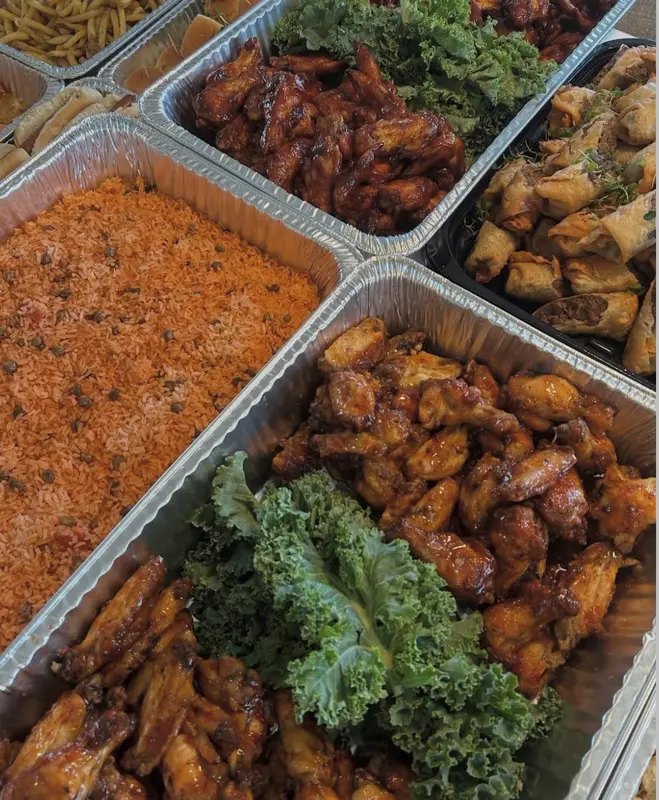
| Drop-off | Lowest | Food only. You supply serving equipment, staff and cleanup. Hard above about fifty guests. |
| Buffet | Moderate | Needs staff to maintain and replenish, faster than plated at scale. |
| Family style | Moderate to high | More rentals and more food per head. Guests consistently prefer it. |
| Plated | Highest | Highest staffing ratio, and needs accurate counts with meal choices per guest. |
| Stations | Variable | Good for mingling events. Cost scales with the number of stations, each needing staff. |
What Philadelphia does well
The city's strengths for events are its Italian and Italian-American tradition, a strong independent restaurant scene that translates well to catering, excellent bakeries, and a real depth in Southeast Asian, Caribbean and West African food, particularly in West and South Philadelphia. The city also does casual formats unusually well, and a well-executed sandwich or family-style spread is a legitimate wedding menu here rather than a compromise.
The usual caution applies: a restaurant you love is not automatically a good caterer. Cooking for a hundred and fifty people off-site, with transport, holding times and finishing on location, is a different operation. Ask about their off-site experience at your guest count specifically.
And as everywhere, dietary coverage is the most repeated complaint about event food. Ask what the vegetarian option actually is rather than whether one exists. A side salad presented as a main course is remembered by exactly the guests who needed it.
Tastings and timing
Eight to ten months out for a peak-Saturday wedding in autumn or late spring; three to four weeks generally works for smaller parties outside December. Winter dates are much easier. Ask whether tastings are free, discounted or charged, and whether the person cooking at your event is the person who cooked at the tasting.